
What Is Solargraphy? The Art and Science of Recording the Sun’s Path Over Time
What Is Solargraphy?
Solargraphy is a photographic process that records the sun’s path across the sky over days, weeks, or months using pinhole cameras and light-sensitive black and white photo paper. Instead of capturing a fraction of a second, it compresses long durations into a single image, revealing patterns of light, weather, season, and time that normally remain invisible.
What emerges is not simply a long exposure, but a layered record of change. As the Earth moves through the seasons, the sun arcs higher or lower across the sky. Clear days leave strong traces. Cloud cover causes interruptions, gaps, or faint passages. Over time, the image becomes a record of both celestial motion and lived weather.
In my work, solargraphy exists at the intersection of art, science, and unpredictability. The process is grounded in optics, duration, and the movement of the Earth, but the final image is also shaped by chemistry, exposure length, atmospheric conditions, and chance. Part art, part science, part chaos, each solargraph becomes a one-of-a-kind collaboration between nature, artist, and time.
You can view a broader selection on my Solargraphy collection page.
What Is a Solargraph?
A solargraph is a long-duration pinhole photograph that records the sun’s repeated movement across the sky. It is usually made with photographic paper placed inside a simple camera and left in one position for an extended period. The resulting image often shows multiple solar arcs, along with interruptions caused by cloud cover, weather, and seasonal change.
Unlike a conventional photograph, a solargraph does not isolate a single moment. It gathers many moments into one surface. That is part of what makes the medium so compelling. It reveals time not as an abstract idea, but as something visible.
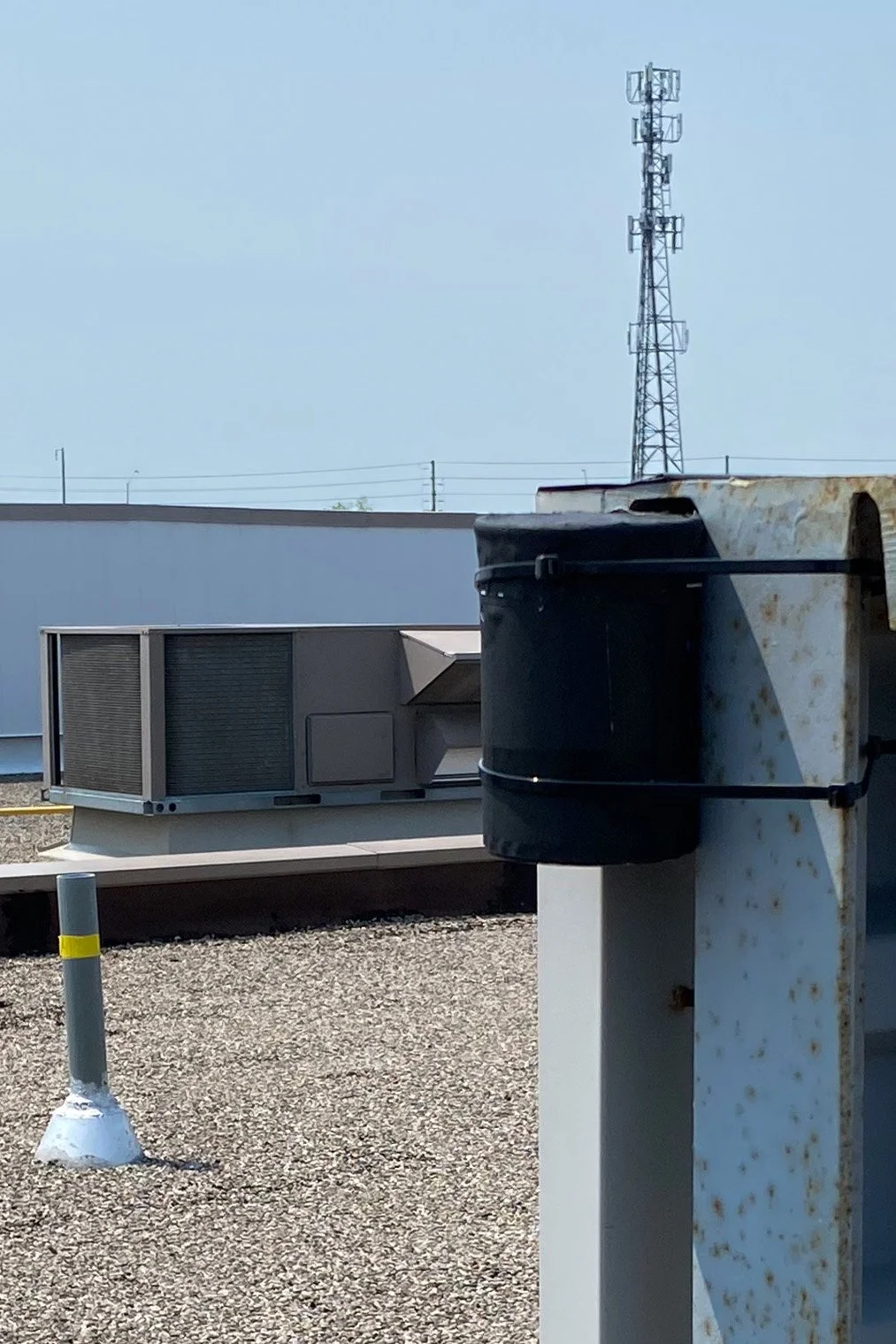
A custom-built pinhole camera installed for the long-duration solargraph below.
How Solargraphy Works
At its simplest, solargraphy uses a light-tight container, a small pinhole, and black and white photographic paper. The camera is placed in a fixed position and left for a long duration. Over days, weeks, or months, light gradually exposes the paper.
After the exposure, the paper is scanned rather than traditionally developed. This preserves the fragile record left by prolonged light exposure and produces the final image. The process can appear technically simple, but the results are shaped by many variables: camera placement, exposure length, season, weather, angle of view, moisture, temperature, and the condition of the paper itself.

183 Day Solargraph #1 (2023.07.21 – 2023.12.21), The Weather Network, Canada
Why the Sun’s Path Changes
The arcs in a solargraph shift because the Earth’s axial tilt changes the sun’s apparent path through the seasons. In summer the sun traces a higher arc. In winter the arc is lower. A long-duration exposure can therefore show many paths layered together, revealing seasonal motion that would normally be too gradual to perceive.
Cloud cover also affects the image. On bright days, the trails are strong. On overcast days, they may be faint or missing altogether. The breaks in the lines are not flaws. They are part of the record.
Why Solargraphs Show Colour
Although solargraphy is often made on black and white photographic paper, colour shifts can appear through prolonged exposure and the chemistry of the material. Heat, humidity, moisture, and time can all influence the surface. The image may also be altered by small intrusions or environmental damage over the course of the exposure.
These colour shifts are part of what gives solargraphy its distinctive visual language. They are not added later as an effect. They arise from the medium itself.

228 Day Solargraph (2023.05.07 – 2023.12.21), Old Eastern Avenue Bridge, Toronto, Ontario, Canada
Art, Science, and Chaos
Solargraphy is often described as a fusion of art and science, but chance is just as important. The process depends on understanding light, optics, seasonal motion, and duration, yet it also requires surrender. Once the camera is installed, much of the image is beyond direct control.
That combination is central to my approach. The medium is precise in concept and uncertain in outcome. That tension is where much of its expressive power lies.
Solargraphy and Impermanence
My solargraphy is influenced by the Buddhist concept of anicca, the understanding that all things are impermanent. In this medium, impermanence is not only a theme. It is an active participant in the making of the image.
Solargraphs reveal that change is not incidental. It is the condition under which the image exists. Weather alters the exposure. Seasons alter the arcs. Material conditions alter the surface. The image becomes a record not of permanence, but of transformation.
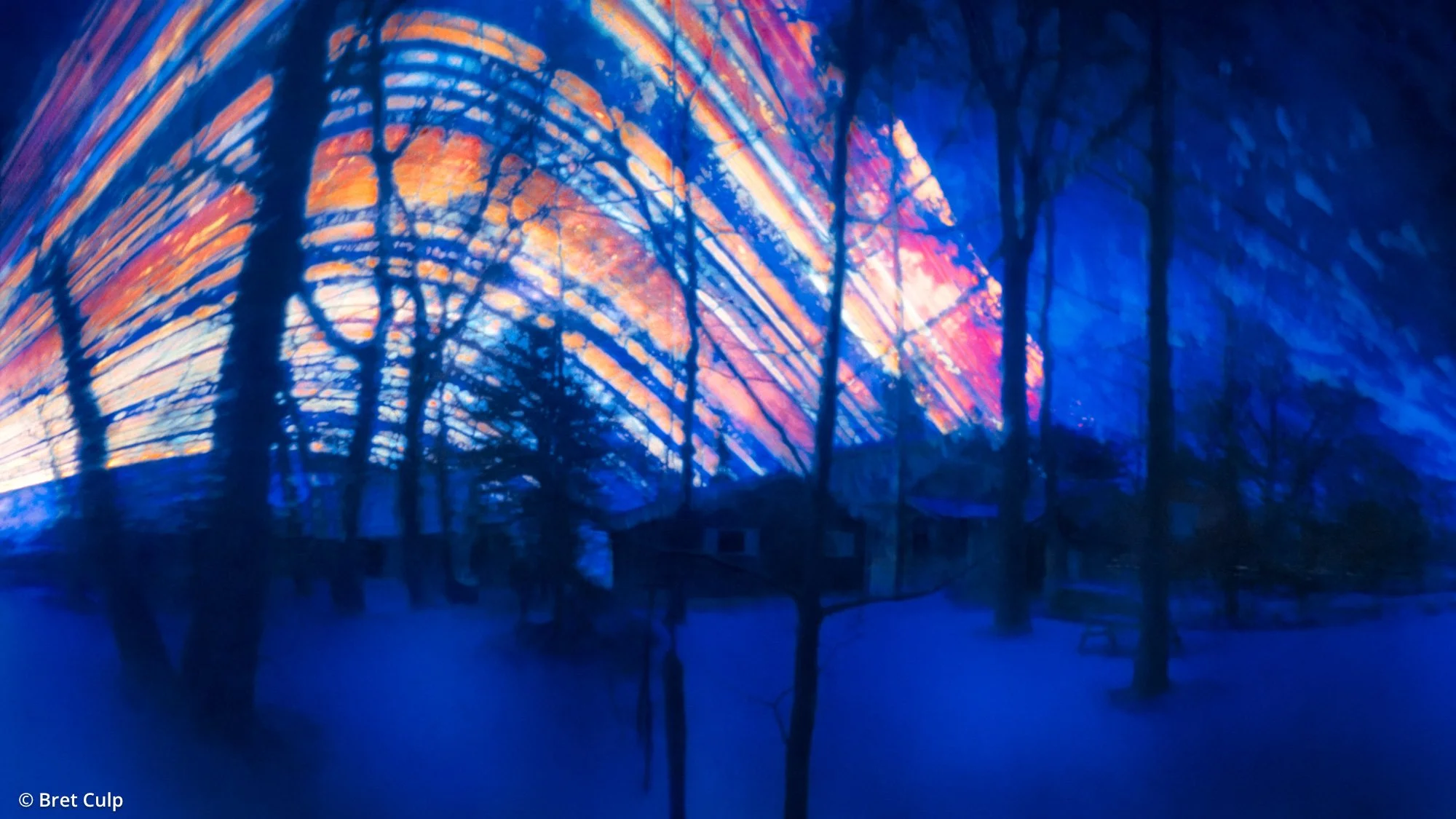
One Year Solargraph (2017.08.07 – 2018.08.07), Georgian Bay, Ontario, Canada
Selected Press and Recognition
The image above, One Year Solargraph (2017.08.07 – 2018.08.07), Georgian Bay, Ontario, Canada, received First Prize Show Winner at Impact 2023 at Neilson Park Creative Centre and the Best Photography Award at the Newmarket Juried Art Show 2023.
My solargraphy work has also been featured by The Weather Network and on the Fall 2024 cover of PhotoEd Magazine.
Watch: The Weather Network Feature
The Weather Network featured my solargraphy in a segment from Out of This World. The video includes my on-camera discussion of the process and the intersection of art, science, weather, and time that shapes this work.
Bret Culp interviewed by The Weather Network about solargraphy—capturing the sun’s path across the sky over six months using pinhole cameras.
Read Scott Sutherland’s article, Solargraphy: The Art, Science, and Chaos of Capturing the Sun’s Path in the Sky.
Featured on the Fall 2024 cover of PhotoEd Magazine, with an accompanying article on my solargraphy work.
Explore Solargraph Prints
My solargraphy prints are available as limited edition archival works. You can explore the collection, view selected works, and find edition details through the links below.